A Year-Round Gutter Checklist for Homeowners Near Leesburg
If you own a home near Leesburg, your gutters do more than catch rain. They control where thousands of gallons of roof runoff go over the course of a year, and in Central Florida that matters more than many people realize. Summer thunderstorms can dump water fast. Tropical systems can push that load even harder. Add high humidity, leaf litter, and the steady wear that comes with a long rainy season, and a neglected gutter system can turn into a headache in a hurry.
The biggest mistake I see homeowners make is treating gutter care like a once-a-year chore. In this part of Florida, it works better as a rhythm. Check the system before the wet season, keep an eye on it during heavy rain months, and do another pass when debris starts building up again. That is the difference between a gutter system that quietly protects the house and one that sends water against the foundation, across walkways, or into planting beds that cannot handle the volume.
A solid year-round gutter checklist Florida homeowners can actually use should do two things. First, it should be simple enough to follow without turning into a major project. Second, it should reflect Florida conditions, not generic advice borrowed from colder climates. Homes near Leesburg, Mount Dora, Dunnellon, Hawthorne, Williston, and nearby areas deal with a specific mix of runoff, fast storms, and outdoor living spaces that change how gutters should be maintained.
Why gutter upkeep matters so much in Florida
In a dry climate, a minor clog may not show itself for weeks. In Florida, you usually find out during a hard rain, and by then the damage has already started. Water spilling over the front edge of the gutter can wash out mulch, stain siding, and carve channels beside the home. If downspouts dump too close to the structure, runoff can pool near the foundation. That is not just an appearance issue. Standing water can create pest concerns and keep areas wet that should dry out.
Florida landscape guidance has long stressed the value of keeping runoff on site when possible and sending it into areas that can absorb it, such as turf, planting beds, rain gardens, or other pervious zones. That matters in sandy soils where stormwater can move quickly, especially during intense summer weather. A good gutter system supports that goal. A neglected one works against it.
This is also where a lot of so-called gutter myths Florida homeowners hear start to fall apart. One myth says if you have a decent roof pitch, gutters are optional. Another says any place that gets rain can use the same drainage setup. Neither idea holds up well here. Roof runoff needs direction. The house, the yard, and any nearby hardscape all depend on it.
The seasonal rhythm that works near Leesburg
Think of your gutter system as a chain. The roof sheds water, the gutters collect it, the downspouts move it, and the discharge point decides what happens next. If one part fails, the whole system falls short. That is why a year-round plan is more practical than waiting for a visible problem.
Here is a simple schedule that fits the region:
- In late winter or early spring, inspect the full system before the heaviest rains arrive.
- At the start of summer, make sure downspouts are still directing water into areas that absorb runoff rather than against the house.
- During peak storm season, watch the gutters during at least one hard rain and note any overflow or pooling.
- In fall, clear out leaf litter and check joints, hangers, and discharge points again.
- After any strong storm event, walk the perimeter and look for fresh erosion, detached sections, or water collecting where it should not.
That schedule is not fancy, but it catches most of the issues that turn small repairs into larger ones.
What to look for in spring
Spring is when I like to start with a full visual inspection. The weather is usually more forgiving, and it gives you a chance to deal with small problems before the long wet stretch.
Start at the roofline and follow the system section by section. You are looking for sagging runs, clogged troughs, loose brackets, and any places where water might escape before reaching the downspout. Even if the gutters are not packed with debris, smaller buildups can slow water enough to cause overflow in a storm.
Pay close attention to where the downspouts end. Florida-friendly drainage principles favor directing water into lawn or planted areas that can absorb it. That does not mean every spot in the yard is suitable. Some low areas stay wet too long. Some beds erode easily. Some discharge points wash mulch onto sidewalks. The goal is not just to move water away from the house, but to move it to a place where it can soak in without creating a new problem.
This is also a smart time to think about layout issues. If the home has outdoor spaces close https://landenecwl891.vantagequill.com/posts/foundation-protection-in-wildwood-where-downspouts-should-discharge to the roof edge, such as a patio or screened enclosure, drainage can become more complicated.
Pool decks, cages, and outdoor living spaces
One of the more overlooked topics in this region is gutter drainage for pool cages and adjacent outdoor spaces. On pool homes, the question is not just whether the gutters catch water. It is where that water goes after it leaves the downspout.
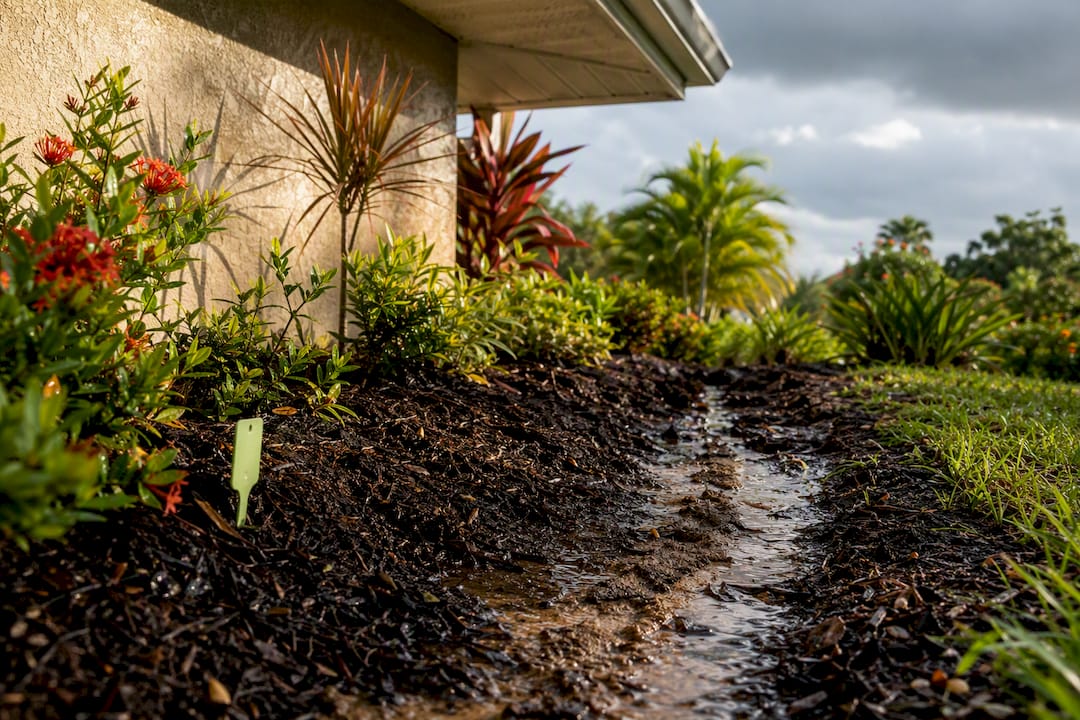
If runoff pours into a narrow side yard beside a screen enclosure, you can end up with erosion, muddy splashback, and messy overflow along a deck edge. If it discharges near a heavily used seating area, every storm can leave behind a wet, dirty perimeter. Roof runoff around outdoor living spaces needs to be managed carefully so water does not undercut soil or create a nuisance where people walk and gather.
I have seen homes where the owner focused on keeping the pool deck clean but ignored the drainage path ten feet away. The result was a recurring washout that kept creeping back toward the enclosure footing. The gutter itself was doing its job. The discharge point was not. That distinction matters.
Summer is the real test
Summer tells the truth about gutters in Central Florida. A system that looks fine in dry weather may fail under a fast afternoon downpour. This is why I always suggest watching the gutters during a real rain at least once or twice each season, from a safe place on the ground.
Look for water streaming over the gutter edge, leaking at seams or corners, or gushing out at the top of a downspout instead of through it. Also watch the ground below. If the water hits one spot hard enough to dig a trench or throw mulch around, the drainage path needs work.
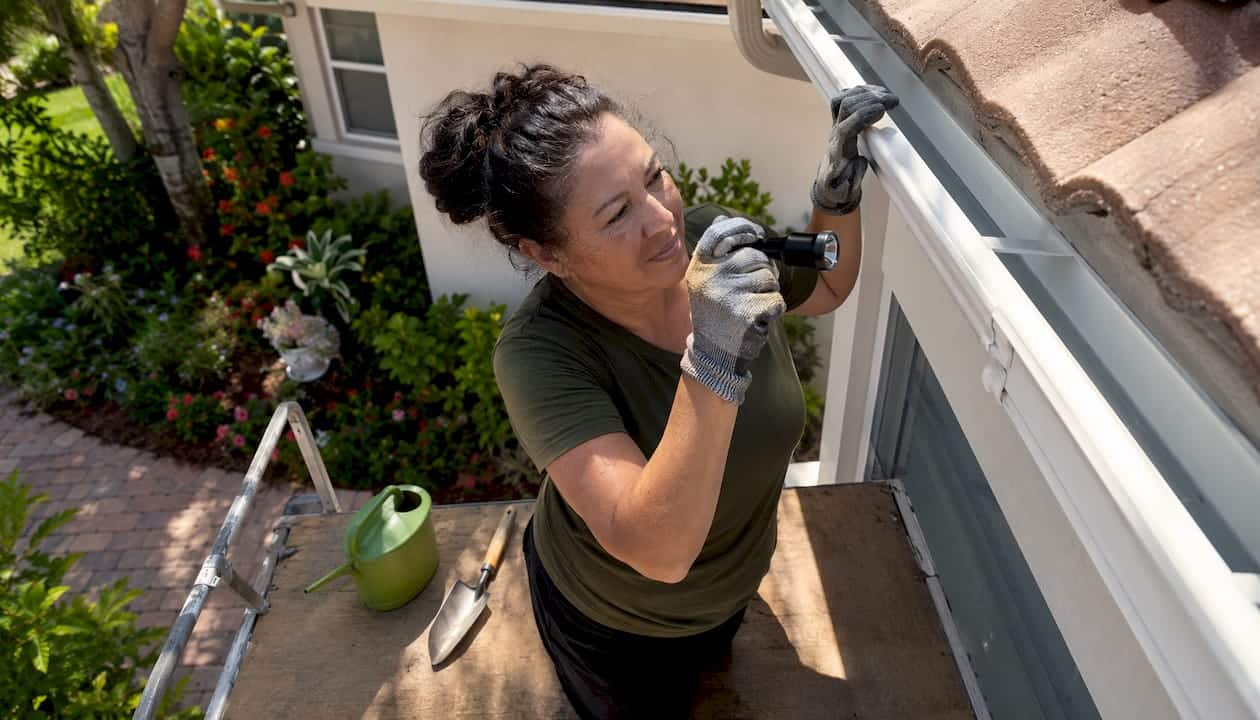
This is often when homeowners ask about DIY gutter cleaning or hire a pro. The honest answer depends on the height of the home, the gutter condition, and your comfort on a ladder. A single-story home with easy access and a light debris load may be manageable for a careful homeowner. A taller home, a system with repeated clogs, or any sign of loose sections is a different story. If the job pushes you into awkward ladder angles, roof contact, or cleanup after storm damage, hiring out is usually the better call.
The phrase DIY gutter cleaning or hire a pro gets tossed around like it has one answer. It does not. Good judgment matters more than pride here.
Fall cleanup is not optional
Even in parts of Florida where winter is mild, fall still matters for gutters. Leaf litter, twigs, and small debris can collect and settle in ways that are not obvious from the ground. By the time the next run of storms hits, that buildup can turn into slow drainage or full blockage.
This is when many people in surrounding towns start searching for services like gutter cleaning Dunnellon FL or gutter repair Hawthorne FL because the problem finally becomes visible. By then, there may already be staining, splash marks, or areas near the foundation that stay wetter than they should. Catching those issues in fall gives you a cleaner start going into the next rainy period.
Fall is also a good time to notice recurring trouble spots. If one valley on the roof dumps more debris than the others, if one downspout always backs up first, or if one corner of the yard erodes no matter what you do, make a note of it. Repeating patterns usually point to a layout or capacity issue, not just a cleaning problem.
Winter is for planning, not ignoring
Florida winters are milder, but they are useful. This is the season to decide whether the current gutter setup still fits the home and yard.
Maybe the system functions, but the drainage point is rough on a planting bed. Maybe the gutters are aging and need more frequent patching. Maybe you are changing the roof and need to think ahead. These are planning conversations, and winter is often the easiest time to have them because you are not reacting to a storm that happened yesterday.
That is where topics like gutter installation cost factors Florida homeowners ask about come into play. Cost is shaped by the home itself, by the amount of guttering needed, and by the specifics of the drainage layout. A simple run with direct discharge is not the same as a home that needs more thoughtful water routing to protect landscaping or outdoor spaces. It is more honest to say costs vary by design and conditions than to throw out a neat number that may not apply.
If you are replacing or upgrading, think beyond the trough
A lot of homeowners focus only on the gutter channel itself, but replacement decisions should include the whole runoff path. A new gutter that still dumps water into the wrong place only solves half the problem.
Seamless systems come up often in local conversations, including searches for seamless gutters Williston FL. While styles and installation methods vary, what matters most from a homeowner standpoint is fit, slope, support, and drainage planning. The cleanest-looking gutter in the neighborhood is not a success if water still pools near the home or cuts through the yard.
The same goes for accessories. Interest in gutter guards Mount Dora FL is understandable, especially where leaf litter is a recurring chore. Guards may reduce the amount of debris entering the gutter, but they do not eliminate inspection or maintenance. Florida conditions still call for periodic checks. Rainfall intensity, small debris, and general wear can still create trouble. Homeowners tend to be happiest with guards when they see them as a tool that can reduce maintenance, not as a permanent excuse to forget the system exists.
Metal roofs need their own attention
If your home has a metal roof, pay attention to how runoff moves off the panels and into the gutter. Questions around gutters for metal roofs Florida homes often come down to compatibility and water control. Metal roofing can move water efficiently, which is great when the gutter system is designed and maintained to handle it. It is less great when the discharge point is poor or the gutter is partially blocked.
That does not mean metal roofs are a problem. It means the gutter system has to be treated as part of the roof drainage design, not an afterthought. If you are switching roofing materials, it is smart to review the gutters at the same time rather than assuming the old arrangement is automatically fine.
Color matters more than people think
Most homeowners start with function, which is right, but appearance matters too because gutters are one of the few drainage features everyone sees from the street. Questions about gutter colors for Florida homes are not just cosmetic. The gutter line can either disappear into the trim or stand out against it, and in neighborhoods with architectural review that may affect what is approved.
Florida association rules can regulate exterior appearance standards, including color and style choices tied to exterior improvements, though those standards still have to comply with applicable code and cannot be used to block a conforming installation outright. For practical purposes, that means it is wise to check your community requirements before ordering a replacement system, especially if you want a finish that contrasts with the fascia or siding.
The best color choice is usually the one that looks intentional and does not call attention to every streak or bit of debris. That is not a hard rule, just a pattern you notice after seeing enough homes.
Signs it is time to call for help
Some gutter issues are routine. Others signal that a professional should take a look, especially if the problem keeps returning after cleaning.
Here are the cases that deserve quicker attention:
- Water pools near the foundation after ordinary rain.
- Soil, mulch, or gravel is washing away below a downspout.
- Gutters sag, separate, or leak at multiple points.
- Overflow happens even when the troughs are not badly clogged.
- Drainage near a pool cage, patio, or walkway keeps creating a mess or slippery conditions.
That might lead to a cleaning visit, a small repair, or a larger drainage adjustment. The key is not to wait for obvious damage.
The small maintenance habits that save money
People often think gutter care is all about avoiding dramatic failures, but the quiet wins matter just as much. A clean, properly draining system protects the lawn from gouges, keeps beds from washing out, and reduces the chance of wet areas lingering beside the house.
It also helps you spot changes sooner. If you know how the system normally behaves, you notice when one corner starts dripping in the wrong place or one downspout suddenly discharges harder than before. That kind of familiarity is what saves money over time. You do not need to become a drainage expert. You just need to notice the ordinary before it turns into the expensive.

For homeowners weighing gutter installation cost factors Florida or trying to decide whether to patch or replace, that perspective helps. A system that needs constant attention, still drains poorly, and keeps creating erosion may not be doing you any favors, even if each repair seems minor on its own.
What a practical checklist looks like in real life
A lot of home maintenance advice sounds good on paper and falls apart in the real world. The best checklist is the one you will actually use. For most Leesburg-area homeowners, that means tying gutter checks to the seasons you already feel: pre-summer setup, rainy-season observation, fall cleanup, and post-storm review.
If you keep those few moments on the calendar, most gutter problems become manageable. You catch the leaf litter before it compacts. You redirect runoff before it starts pooling near the house. You notice when the water is cutting across the yard instead of soaking into turf or planting beds. And if you have a pool area, screened enclosure, or a landscape that has been hard to establish, you protect the spaces that make Florida living enjoyable in the first place.
A gutter system is not glamorous. It is one of those parts of the house people ignore when it works and curse when it fails. Near Leesburg, that failure usually shows up fast and in very visible ways. Stay ahead of it, season by season, and the system does what it is supposed to do: move water away from the home, keep it on site when possible, and help the yard absorb it without damage. That is the kind of maintenance that pays you back every rainy month of the year.